


£ 31.25

Sponsored links
|
|
£ 31.25 |
To Shop
|
| COMPARE ALL WEBSHOPS (1) | ||
 Description
Compare webshops (1)
Sponsored links · Some shops pay us a fee
£ 31.25
Shops with other sizes
Description
(1)
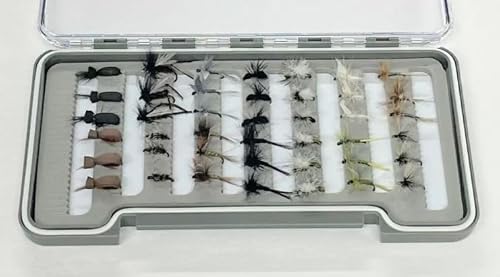
Dry Fishing flies are probably the most traditional, in most fisherman’s eyes, (although wet fishing goes back much further) The dry fly method is basically deceiving the trout into believing this is their natural food which they readily eat from the surface. Most fly fishermen say it’s the hardest method as opposed to perhaps lure fishing, but I don’t go with that theory. A simple technique of floating the dry fly along the surface means you can see exactly where your fly is and usually you will see the fish approaching. Avoid any drag using this method of fishing as it will look unnatural to the trout, just cast upstream and allow the fly to drift with the current, always cast diagonal to avoid scaring away any fish. Select your dry fly to mimic the insect life around you, matching the hatch is quite easy if you take some time to observe which flies are around and if indeed the trout are rising out of the water to take them. If you do not see the trout rising then it is likely they are feeding subsurface and therefore a different method is required.. Use a lightweight line, fish have good eyesight, a smaller rod for dry fly fishing is preferred as you will not really be making long casts Dry flies may be "attractors", such as the wulff fly or "natural imitators", such as theelk hair caddis. A beginner may wish to begin with a such as an Adams Parachute. The "parachute" on the Adams makes the fly land as softly as a natural on the water and has the added benefit of making the fly very visible from the surface. Being able to see the fly is especially helpful to the beginner. The fly should land softly as if dropped onto the water, with the leader fully extended from the fly line Chemically sharpened barbless strong hooks Professionally tied flies, lasting and strong
 Related results
 Product specifications


